Not July or August – September it is!
Ask any local in Dubrovnik when the best time to visit is, and you will hear the same answer again and again: September. Not July, when the Old Town swells with cruise ship passengers and the midday heat drives everyone into the shade. Not August, when every restaurant has a queue and the afternoon temperatures make walking the city walls feel more like a survival exercise than a leisure activity. September — when the crowds thin, the light turns golden, and the sea reaches its warmest temperature of the entire year.
For travellers who value quality over novelty — who would rather experience a destination at its genuine best than tick it off during peak season — September in Dubrovnik is not a compromise. It’s the premium option. And an increasing number of the most discerning travellers and luxury travel agents have come to recognise this.

The Sea Is Warmer Than You Think
Here’s a fact that surprises most visitors: the Adriatic Sea around Dubrovnik is warmer in September than it is in June. Throughout the summer, the water absorbs heat steadily. By early September, surface temperatures typically reach 24–26°C . Warm enough for long, unhurried swims without any of the teeth-gritting acclimatisation that early-season visits sometimes require.
For a boat day, this makes a material difference. When the water is this comfortable, you swim more, float more, and spend longer at each stop. The whole rhythm of the day slows down in the best possible way. Guests in September tend to take longer swims, linger at beaches, and are more inclined to jump in repeatedly throughout the day. The warmth of the water transforms the experience from ‘swimming is one of the activities’ to ‘the water is where we live now.’
Fewer People, Better Experience
By mid-September, the large cruise ships reduce their frequency significantly. The Old Town, which in July can feel like a human conveyor belt, returns to something approaching its natural state. You can walk the Stradun without crowds. You can get a table at a local restaurant without booking 3 days in advance. You can visit the city walls and actually stop to admire the view. Rather than being pushed along by the crowd behind you.
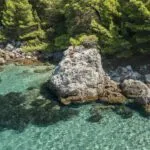
On the sea, the difference is even more pronounced. Beaches and coves that are dotted with boats in August are often entirely empty in September. The Elaphiti Islands feel genuinely private. Your skipper has more flexibility in choosing stops because there’s no need to avoid the busy spots — in September, there are no busy spots. Every cove feels like your cove. Every beach feels discovered, not shared.
The restaurants on the islands also benefit. In August, a popular konoba might turn away walk-ins because every table is full. In September, the same restaurant welcomes you with genuine warmth and the kind of unhurried service that makes a meal feel like an event rather than a transaction.
Our complete travel planner for Dubrovnik covers the full picture of what to expect throughout the year, but September consistently emerges as the sweet spot.
The Light Is Different
Photographers and cinematographers have long known that the quality of light in the Mediterranean changes as summer fades. In September, the sun sits lower in the sky, casting longer shadows and bathing everything in a warm, honeyed glow that makes July’s harsh midday brightness feel almost crude by comparison.
For a day on the water, this means the entire coastline looks different — richer, warmer, more textured. The Old Town walls take on a three-dimensional quality in September’s softer light. Even the water looks different: deeper blues, more vivid greens, and that particular late-summer sparkle that film directors spend millions trying to recreate.
If you plan to take photographs — and you will — September is incomparably better than peak summer. The golden hour lasts longer, the midday light is softer, and the absence of haze gives the coastline a crispness and clarity that July simply cannot match.

Flights Are Cheaper and More Available
The practical advantages of September travel extend beyond the experience itself. Direct flights from major European cities continue throughout the month, but fares drop noticeably once the school-holiday rush ends in early September. Business class availability improves. Hotel rates come down. Everything that costs a premium in peak season becomes more reasonable — without any reduction in quality.
For travel agents, this is a significant selling point. Your clients get a superior experience at a lower overall cost. The accommodation options are the same, the restaurants are the same, the boats are the same — but the price of flights and hotels is often 20–40% less than July or August. That’s a conversation worth having with clients who appreciate value, not just expense. It also allows you to upsell the on-the-ground experience. A longer boat charter, a private dinner, an additional day trip — while staying within the same overall budget.
What September Boat Days Look Like
A private boat tour in September has a particular character. The pace is gentler. The itinerary tends to be more exploratory because there’s no need to rush between spots before they fill up. Your skipper can take the scenic route, linger at a cove, or extend a lunch stop without worrying about the schedule.
The evenings are also spectacular. Sunset comes earlier than in July, which means you can end a full-day charter with a golden-hour cruise past the Old Town walls and still be back at your hotel in time for a late dinner. It’s a more civilised rhythm overall — less frenetic, more considered, and ultimately more memorable.

The Smart Traveller’s Choice
There’s a reason that the most experienced travellers — the ones who’ve seen enough of the world to know what actually matters — consistently choose shoulder season over peak. It’s not about saving money (though that’s a pleasant side effect). It’s about experiencing a place as it actually is, rather than as a tourist-season version of itself.
September in Dubrovnik is Dubrovnik at its finest.
The locals know it. The savviest travellers know it. And now you do too.